21 Things You Should Never Include In Your Resume:
/magnifying-glass-on-resume-157307281-575b0f0c5f9b58f22ed79286.jpg)
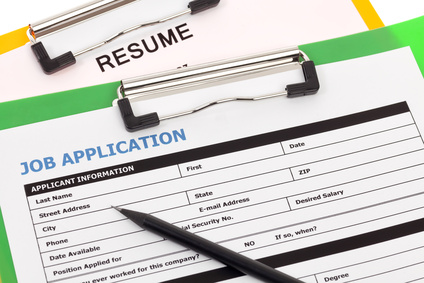



- Irrelevant Work Experience: Truly, you may have been the "master of making lattes" at the cafe you worked for in during your school years. In any case, unless you are planning on redeeming that title, the time has come to dispose of all that messiness.
- Personal Stuff: Try not to include your marital status, religious preference, or Social Security number (in case you're applying for a job in America). This may have been the standard in the past, however this information is presently illegal or very discouraged for your employer to ask from you, so there's no compelling reason to include it.
- Your Age: In the event that you would prefer not to be discriminated against for a position because of your age, it's time to evacuate your graduation date. Another surprising way your Online CV could give away your age: twofold spaces after a period.
- Too Much Text: When you utilize a 0.5-inch margin and eight-point text style in an effort to get everything to fit on one page, this is an epic fail.
- References: On the off chance that your employers want to speak to your references, they'll ask you. Also, it's better on the off chance that you have a chance to tell your references ahead of time that a future employer may call. On the off chance that you state "references upon ask for" at the bottom of your CV, you're just wasting a valuable line.
- Inconsistent Formatting: The format of your CV is similarly as important as its substance. The best format is the format that will make it easiest for the hiring manager to scan your CV and still have the capacity to choose your key qualifications and career goals. When you pick a format, stay with it. On the off chance that you compose the day, month, and year for one date, then utilize that same format all through whatever remains of the CV.
- Personal Pronouns: Your CV shouldn't include the words "I," "me," "she," or "my". "Try not to compose your CV in the third or first individual. It's understood that everything on your CV is about you and your experiences."
- Present Tense For A Past Job: Never describe past work experience using the present tense. Just your current job ought to be composed in the present tense.
- A Less-Than-Professional E-mail Address: If you still use an old email address, like BeerLover123@gmail.com or CuteChick4life@yahoo.com, it's time to pick a new one.
- Headers, Footers, Tables, Images, Or Charts: These fancy embeddings will have hiring managers thinking, "Might you be able to not?" While a well-formatted header and footer may look professional, and some cool tables, images, or charts may support your believability, they also confound the applicant-tracking systems that companies utilize nowadays. The system will react by scrambling up your CV and spitting out a poorly formatted one that may never again include your header or charts. Regardless of whether you were an ideal candidate for the position, now the hiring manager has no real way to contact you for an interview.
- Your Boss Name: Try not to include your boss' name on your CV unless you're OK with your potential employer contacting him or her. And, after its all said and done, the main reason your boss' name ought to be on your CV is if the individual is somebody noteworthy, and in the event that it would be really amazing.
- Company-Specific Jargon: "Companies often have their own internal names for things like customized software, technologies, and processes that are just known within that organization and not by the individuals who work outside of it," "Make certain to reject terms on your CV that are known just to one specific organization."
- Social-Media URLs That Are Not Related To The Targeted Position: Links to your opinionated blogs, Pinterest page, or Instagram account have no business taking up prime CV real estate. "Candidates who tend to think their personal social media locales are valuable are putting themselves in danger of landing in the 'no' heap". "Yet, you should list relevant URLs, for example, your LinkedIn page or any others that are professional and straightforwardly related to the position you are trying to acquire".
- More Than 15 Years Of Experience: When you start including jobs from before 2001, you start to lose the hiring manager's interest. Your most relevant experience ought to be from the past 15 years, so hiring managers just need to see that. On the same note, never include dates on education and certifications that are more seasoned than 15 years.
- Salary information: "A few people include past hourly rates for jobs they held in college". This information is completely unnecessary and may send the wrong message.
- Outdated Fonts: "Try not to utilize Times New Roman and serif fonts, as they're outdated and antiquated". "Utilize a standard, sans-serif text style like Arial." Also, know about the text dimension, she says. Your goal ought to be to make it look pleasant and smooth — yet in addition easy to read.
- Annoying Buzzwords: "What CV terms are the greatest turnoffs?" They refered to words and phrases, for example, "best of breed," "hard worker," "think fresh," "collaboration," and "accommodating person." Terms employers do get a kick out of the chance to see on CVs include: "achieved," "managed," "settled," and "launched" — yet just on the off chance that they're utilized as a part of moderation.
- Reasons You Left A Company Or Position: Candidates often think, "In the event that I explain why I left the position on my CV, maybe my chances will move forward." "Wrong," "Listing why you left is irrelevant on your CV. It's not the time or place to bring up transitions starting with one company then onto the next."
- Your Grades: Once you're out of school, your grades aren't so relevant, If they were particularly high, it's OK to leave it. Be that as it may, in case you're more than three years out of school, or if your grades weren't outstanding, jettison it.
- An Explanation Of Why You Want The Job: Your CV isn't the place to start explaining why you'd be a great fit or why you want the job. Your abilities and qualifications ought to have the capacity to do that for you — and in the event that they don't, then your CV is either in bad shape, or this isn't the correct job for you.
- Short-Term Employment: Avoid including a job on your Online CV in the event that you just held the position for a short timeframe. You ought to especially avoid including jobs you were given up from or didn't care for.

No comments:
Post a Comment